1. Describe the situation, not just the noise
“It is noisy” can mean several things. Do nearby conversations distract people? Does the meeting room sound echoey? Is there nowhere to take a short call? Record where, when and during which activity the problem occurs. Different situations call for different solutions.
2. Separate activities thoughtfully
Check whether collaborative areas sit immediately beside focused workstations. Consider a dedicated place for online meetings and clear expectations around speakerphone use. Adjusting the layout and everyday habits can be a useful first step.
3. Give conversations their own space
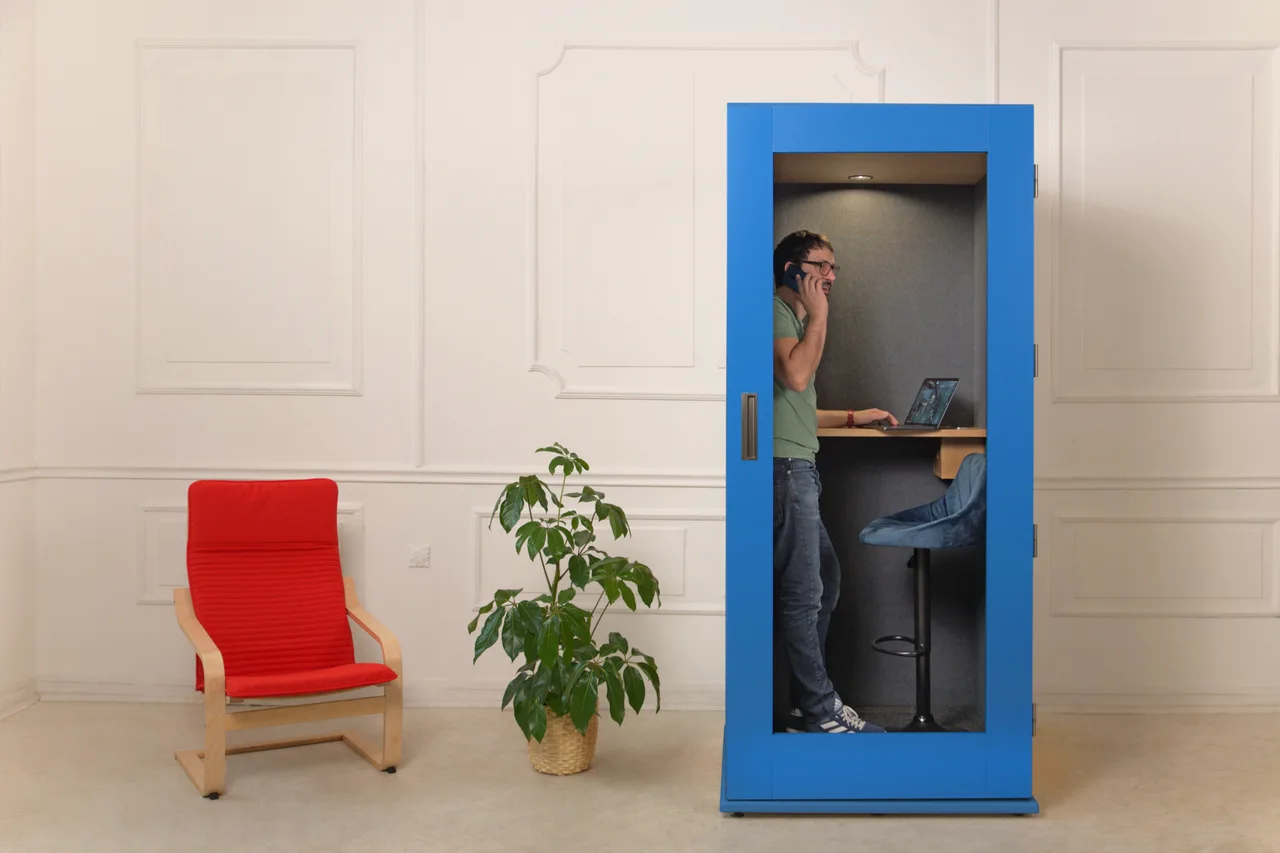
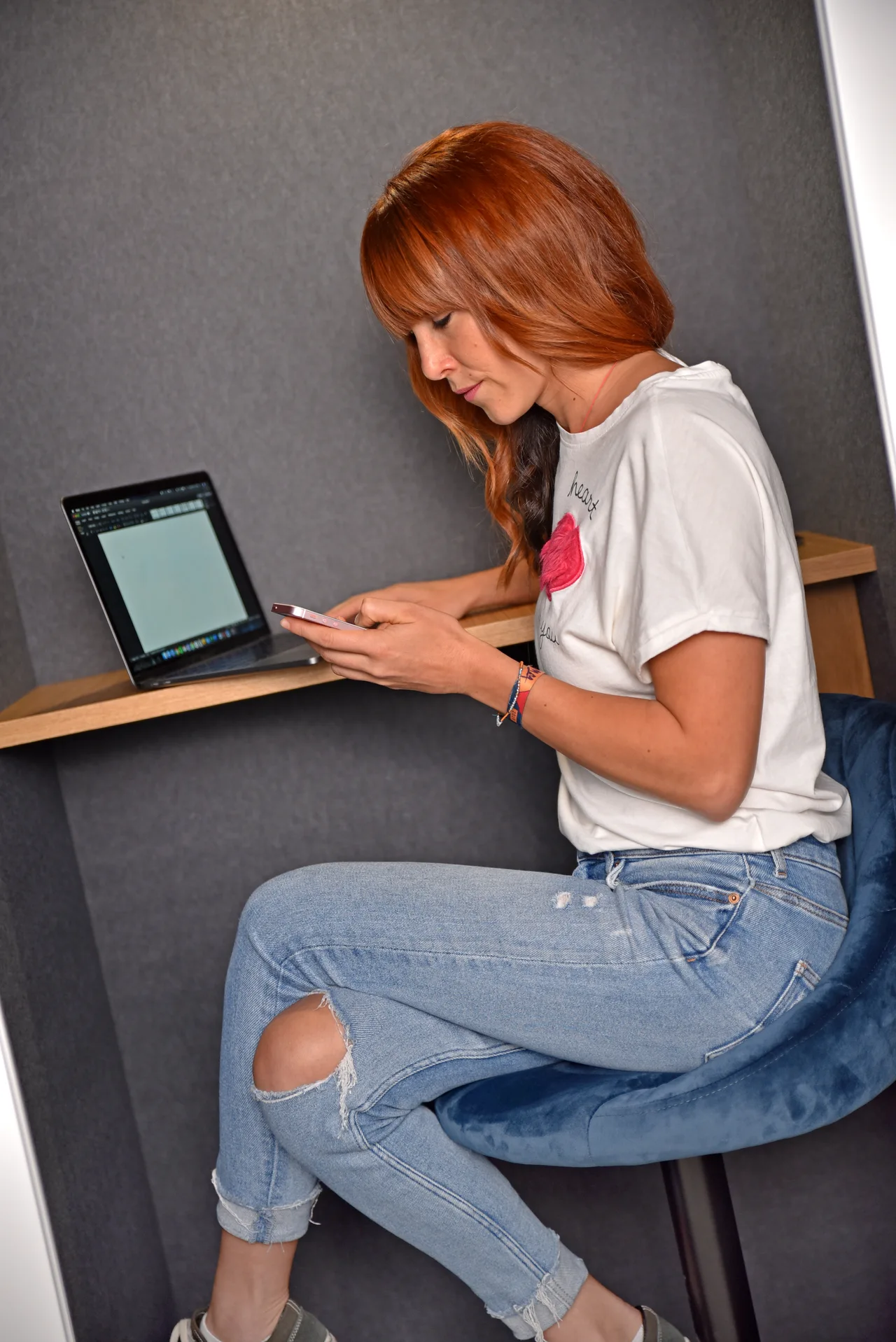
A phone booth is an option when there is no dedicated place for individual calls. Discuss the number of booths in relation to simultaneous calls, rather than headcount alone. Check installation space, ventilation, clear access and comfort for the usual duration of meetings before ordering.
4. Consider the room as a whole
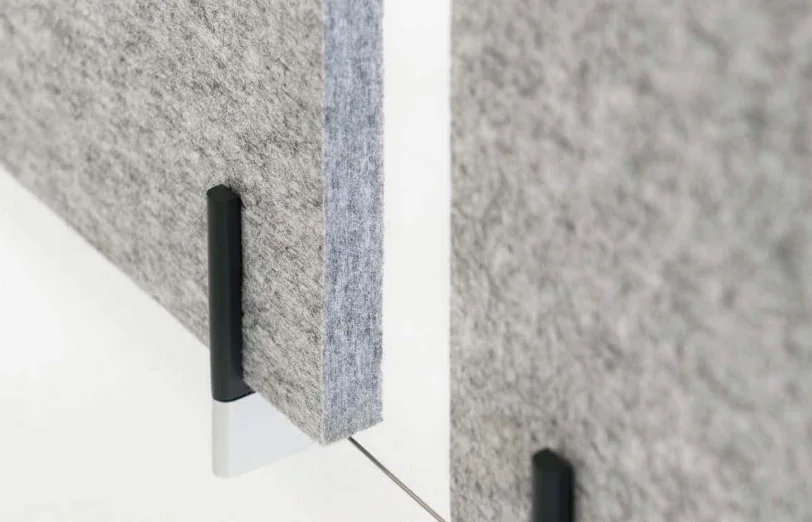
Glass, concrete and other hard surfaces can create many sound reflections. Acoustic panels and appropriately positioned dividers are different tools for improving a space. Selection and quantity depend on the room. For a complex problem, consider acoustic measurements and a professional design.
5. Check the result during a normal working day
Return to the situations you recorded at the start. Is it easier to take a call? Is a suitable meeting space available? Are louder activities in a sensible location? Feedback from the people using the office is valuable; measurements matter when the project has specific technical targets.
Prepare a short office brief
Record room dimensions and height, headcount, conversation areas and the main surface finishes. Add an indicative budget and timeline. This gives a more useful starting point for discussing booths, dividers and panels than choosing from a photograph alone.
Further reading: Ecophon — People-centred offices ↗
Explore the solutions