When the problem is inside the room
Sound reflects repeatedly in a room with many hard surfaces. Conversations can develop an uncomfortable reverberant quality. Sound-absorbing materials limit some of these reflections. This is the job for which acoustic panels are commonly considered.
When sound comes from another space
If you clearly hear the neighbouring meeting room, sound may be travelling through a wall, door, ceiling or another connection. The construction’s sound insulation needs assessment. Adding decorative panels to one wall does not mean this transmission problem will be solved.
Where PET panels fit
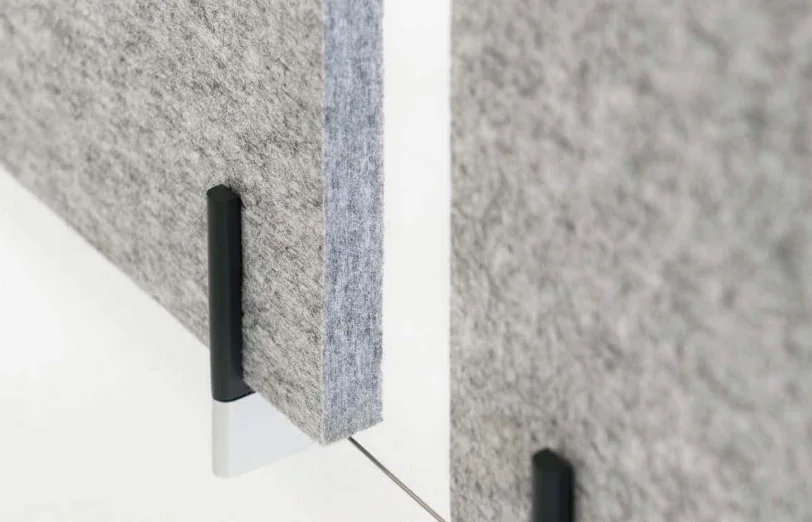
PET panels offer a sound-absorbing surface as well as colour and custom-cut options. Performance depends on the specific material, thickness, coverage and installation. Request acoustic data for the chosen configuration instead of comparing products by their generic name.
What about dividers between desks?
Dividers help organise the space and can contribute to an acoustic solution. Their height and positioning matter, as do surrounding reflective surfaces. An open screen is not equivalent to an enclosed, sound-insulated room.
Write a useful enquiry
Describe whether you hear a conversation from another room, from a nearby desk or reverberation from your own voice. Include dimensions, ceiling height and the main finishes. If confidentiality or a specific acoustic target is essential, state it at the outset and seek specialist assessment.
Match the solution to the problem
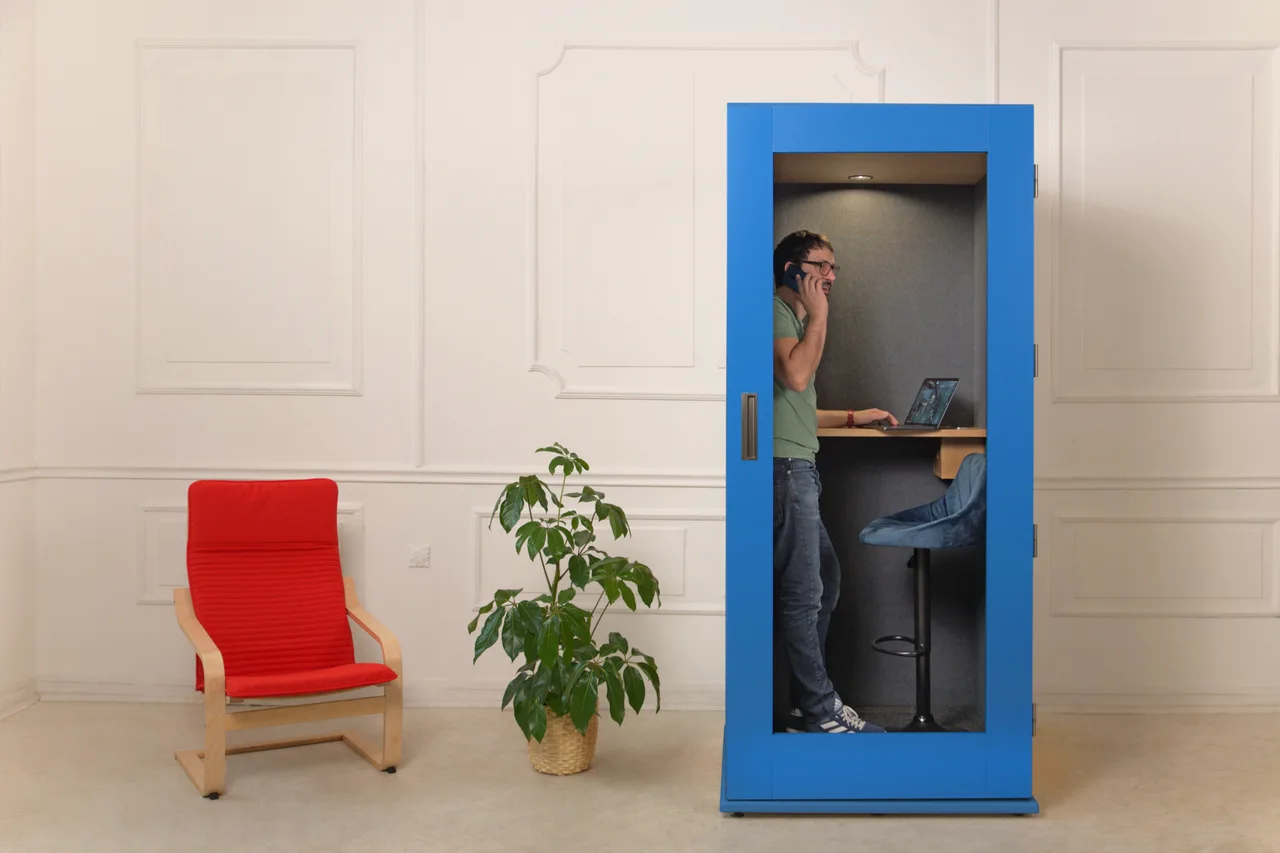
Panels, dividers and phone booths serve different purposes. They can complement one another, but they are not interchangeable. A clear brief helps avoid choosing products that look suitable in a photograph but do not address the actual need.
Further reading: Rockfon — Acoustics: absorption and insulation ↗
Explore the solutions